Science meets fiction
Anthology now published
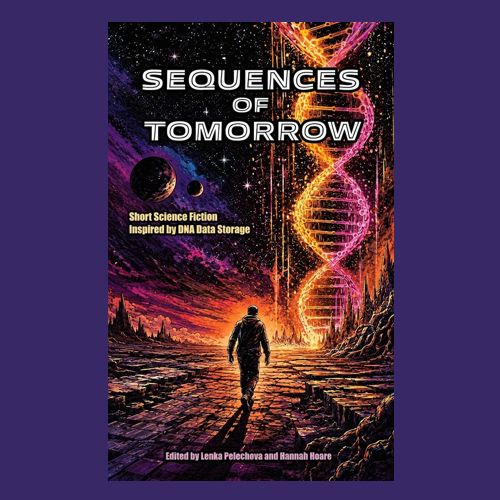
Sequences of Tomorrow
Short Science Fiction Inspired by DNA Data Storage
The EnDROIDS anthology is here. Discover imagined futures inspired by our research, bringing together stories from the short story competition and commissioned work by Hannah Hoare.
Get the book on AmazonAvailable now on Amazon UK
The competition
Meet the winning storytellers
With 39 entries from multiple countries, the EnDROIDS Short Story Writing Competition brought a wealth of imaginative responses to DNA data storage. Thank you to everyone who shared their creativity with us.
-
First place
Killing the Light
-
Second place
Commonality
-
Third place
Long Since Long Ago
Read the winning stories in Sequences of Tomorrow.
From research to stories
How the competition worked
The competition brought writers and researchers together to explore DNA data storage through science fiction. Writers could choose any style, with the technology central to their story.
Entries were judged anonymously for their engagement with DNA data storage, originality and quality of writing. The competition offered three cash prizes and publication of the top 15 stories in an anthology.
The competition is now closed. The original process and entry information are preserved below.
The judging panel
- Hannah HoarePublished sci-fi writer and winner of the 2021 Book Edit Writers’ Prize
- Dr. Lenka PelechovaSocial Scientist, EnDROIDS research project
- Prof. Dr. Natalio KrasnogorProject Lead, EnDROIDS research project
- Prof. Dr. Steven GustafsonInformation School, University of Washington (USA)
- Dr. Alex LaverickDNA data storage scientist (UK)
- Dr. Joshua LohBiotechnologist (UK)
Entry requirements & evaluation
These requirements applied to the original competition; submissions are no longer open.
- Story length
- 2,000–3,000 words
- Entry fee
- Free
- Eligibility
- Published and unpublished writers over 18
- Submissions
- Up to two original, unpublished stories per person. Simultaneous submissions were not allowed.
- Format
- Word document, 12-point Times New Roman, with no author name in the story to allow anonymous judging
- Language
- English
Evaluation criteria
- Engagement with DNA data storage: the theme had to be central to the story.
- Creativity and writing style: originality and quality of writing.
Prizes
The competition offered £750 for first place, £500 for second place and £250 for third place, alongside anthology publication for the top 15 stories.
Original competition FAQs & publication terms
Could writers under 18 enter?
No. The competition was open only to individuals over 18 years old.
Could a story already posted on a blog be entered?
No. Only unpublished stories were eligible, and simultaneous submissions were not accepted.
How many stories could each writer submit?
Up to two submissions per person were allowed.
What feedback was offered?
The competition offered short feedback for all submissions.
What were the copyright terms?
The original competition terms stated:
By submitting your entry, you agree that if your story is among the top 15, it will be published under a Creative Commons CC BY (attribution) license. This means that while you retain full copyright of your story, you grant us the right to publish and monetise it within the competition’s anthology.
Stay informed about the anthology & related events
Sign up for news and events related to the competition and anthology.
The science behind the fiction
Explore DNA data storage
How can DNA help us store information? Meet the ideas behind the stories through the EnDROIDS team’s introduction to the technology, its scientific foundations and its wider social implications.
Using biology and nanotechnology to create green-by-design DNA-based data-structures for a data-hungry world.
Start here · Audio
What is DNA data storage?
An introduction to DNA data storage and why we are developing it.
Society
Societal implications
Open the videoBiology
Synthetic biology
Open the videoComputing
Scientific computing
Open the videoStep inside the research
See where the science behind these imagined futures takes place.